

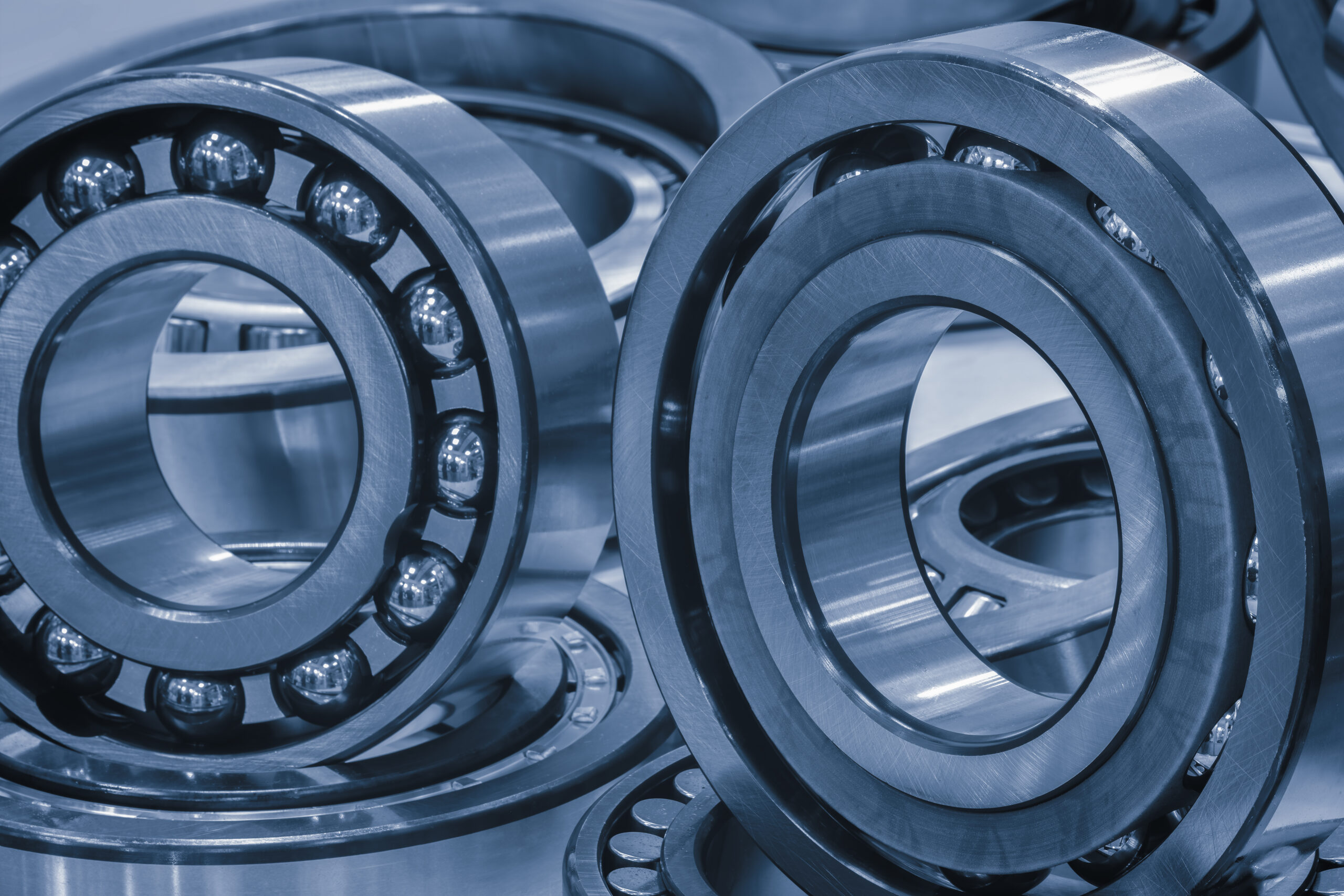
INDUCTION HEATING VS OIL BATH, OVEN AND HOT PLATE FOR MOUNTING BEARINGS.
Education | 5 November 2026
Induction heating expands a bearing for mounting by generating heat inside the bearing itself, with an electromagnetic field and a sensor that controls the temperature. An oil bath, oven, hot plate or open flame heats from the outside, which usually means more waiting, more wasted energy and less control.
Every workshop is after the same result: a bearing that slides onto the shaft without force. Here is how the five bearing heating methods compare on speed, temperature control, energy use and safety, and what to keep in mind when you choose one of our induction bearing heaters.

WHY THE BEARING HEATING METHOD MATTERS.
Heating makes the bearing expand, so it can be mounted without pressing or hammering it into place. As a general rule, a bearing should not be heated above 120 °C (248 °F).
Temperature differences within the part matter as well: they cause thermal and mechanical stress, which can result in irreversible damage. The thermal image shows what that looks like. With 1 sensor the inner ring is at 110 °C while the outer ring is at 60 °C. With 2 sensors the outer ring reaches 85 °C. A good heating method therefore stays within the limit and brings the bearing up to temperature evenly.
OIL BATH, OVEN, HOT PLATE AND OPEN FLAME.
Oil bath
Oil baths have been a workshop standard for decades. They are also slow, the oil can contaminate the bearing, and hot oil and slippery parts are a safety concern. On top of that, used oil has to be managed and disposed of.
Oven
An oven heats more consistently than a flame, but it warms the whole chamber to heat one part. That means long cycles, high energy use and limited flexibility when bearing sizes change. Where quick turnaround matters, the oven often becomes the bottleneck.
Electric hot plate
Hot plates are inexpensive and easy to use, which is why so many workshops have one. But the heat has to travel through the bearing from the point of contact, so heating is slower and less even. Temperature control is limited, and the plate is an exposed hot surface.
Open flame or torch
A torch is always at hand and heats quickly, but only where the flame touches the metal. The temperature is guesswork, so overheating is a real risk. Much of the heat goes into the surrounding air, and you bring a fire hazard into the workshop.
HOW AN INDUCTION BEARING HEATER WORKS.
An induction heater sends an alternating magnetic field through a yoke that passes through the bearing bore. The field generates heat in the workpiece itself, not in the surrounding air.
You set the temperature, place a sensor on the bearing, and the heater holds that temperature automatically until you are ready to mount. More on the technology in our free whitepaper, Induction Heating 101.

FASTER, WITH LESS ENERGY.
Because the energy goes straight into the workpiece, there is no chamber, oil or plate to warm up first. Our figures for a typical shrink-fit job show the difference, with less than 40% of the energy in a fraction of the time.
This is a 132M stator housing on our PROTHERM STATOR HOUSING-LINE, not a bearing on a workshop heater, so the numbers will differ for your job. The principle is the same: the heat is generated in the part, not in the air around it.

ACCURATE AND REPEATABLE.
Because a sensor controls the cycle, the same job gets the same heat every time. EASYTHERM heaters offer a Temperature Mode from 0 to 240 °C and a Temperature Hold function, with a Time Mode on the larger models for repeatable production work.
For larger or more sensitive parts, SURETHERM heaters add a second sensor. With 2 Sensor Technology, they measure the inner and outer part of the workpiece in real time and regulate the power to keep the difference under control.
CLEANER AND SAFER.
There is no open flame, no combustion and no hot oil to handle, and no used oil to dispose of afterwards. The bearing stays clean, and your energy use goes down with the shorter cycle.
One thing does not change: the bearing itself gets hot, so wear heat-resistant gloves.

INDUCTION HEATING VS CONVENTIONAL METHODS.
| Aspect | Oil bath, oven, hot plate, flame | Induction |
|---|---|---|
| Where the heat goes | Air, oil or a hot surface first, then the bearing | Directly into the bearing |
| Speed | Often slow, or fast but uncontrolled | Fast and controlled |
| Temperature control | Often inconsistent | Set, measured by a sensor and held |
| Cleanliness | Oil contamination or combustion, depending on the method | No oil, no combustion |
| Energy use | Also heats the surroundings | Focused on the workpiece |
| Safety | Open flame, hot oil or exposed hot surfaces | No flame or hot oil. The bearing itself is still hot |
WHAT TO KEEP IN MIND WITH INDUCTION.
The heater has to fit the job
The weight of the workpiece, its bore diameter and its outer diameter decide which model you need. Our overview of induction bearing heaters lists these limits for every standard model.
Residual magnetism
A magnetic field can leave residual magnetism in the bearing, which you do not want in service. All EASYTHERM and SURETHERM heaters demagnetise the workpiece automatically at the end of the heating cycle.
Safety around the heater
Follow the safety instructions in the manual. People with a pacemaker should keep at least 0.5 m away from a heater in operation.
FREQUENTLY ASKED QUESTIONS.
What temperature should a bearing be heated to for mounting?
As a general rule, a bearing should not be heated above 120 °C (248 °F). Check the instructions of the bearing manufacturer for your bearing. On an induction heater you set the temperature, and a sensor on the bearing makes sure it is held.
Is induction heating better than an oil bath for bearings?
Induction heats the bearing directly, so there is no oil to warm up, handle or dispose of, and no oil that can contaminate the bearing. The temperature is measured on the bearing and held automatically.
Can I use an oven or hot plate instead of a bearing heater?
For an occasional job on a small bearing they can be enough, as long as you check the temperature of the bearing itself. For regular jobs, larger bearings or tight schedules, the longer cycles and limited control quickly start to cost you more.
Can I heat a bearing with a torch?
We advise against it. A flame heats only where it touches the metal and the temperature cannot be controlled, so you risk overheating and damaging the bearing.
Can I heat sealed or pre-greased bearings?
Whichever method you use, seals and grease have their own temperature limits. Follow the instructions of the bearing manufacturer, and ask us if you are in doubt.
Not sure which bearing heater fits your job?
Tell us the weight, bore and outer diameter of your workpiece and we will help you choose. We have designed and built induction heaters in Harderwijk, the Netherlands, since 1992.